The Best Offer

The Louvre heist shook the world—and by coincidence, this weekend I happened to find a small box tucked away in a drawer, filled with postcards I’d bought over a decade ago during my visit to the Louvre in Paris. Among them was one of The Mona Lisa.
I visit Europe almost every year, and what always leaves the deepest impression on me during my travels are the museums and art galleries. Beyond the excitement of seeing world-famous masterpieces, it is the atmosphere of those places that lingers and draws me back.
Speaking of the Mona Lisa, her story is so well-known that it hardly needs repeating. Yet what fascinates me even more is not her fame, but her theft in 1911.
At that time, many novels had not yet been written, and the tales surrounding her had not yet spread. She was still just a small painting hanging quietly in the Louvre.
Then one day, a copyist painter noticed that the wall where the Mona Lisa once hung was empty. Only then did people realize—she had been stolen.
The incident shook all of France; even Picasso was considered a suspect. After a massive investigation, the police found nothing.
Two years later, in 1913, a painter in Florence received a letter signed “Leonardo,” claiming that the Mona Lisa was in his possession. The writer argued that since Leonardo da Vinci was Italian, the painting rightfully belonged to Italy and should be returned.
The letter’s author was none other than the thief himself—an Italian maintenance worker at the Louvre, Peruggia.
When arrested, Peruggia declared that he had fallen in love with the woman in the painting and could not bear to see his nation’s treasure exiled abroad. That was why he had stolen her: to return her to her rightful home.
To fall in love with the woman in the painting, to fall in love with the Mona Lisa—across time and cultures, there have been countless tales, both true and embellished. When you meet her gaze, perhaps her hazy eyes, enigmatic smile, soft skin, and serene demeanor really do ensnare you so deeply that one would risk everything.
Much like Virgil Oldman, the protagonist in the film The Best Offer.
Directed by Italian filmmaker Giuseppe Tornatore—whose The Legend of 1900 had already enchanted me—and scored by Ennio Morricone, the film tells the story of an aging auctioneer. As his name suggests, Oldman is indeed old, yet still commands countless auction halls with his sharp eyes and eloquence. Despite the packed rooms and constant admiration, outside of work Virgil lives utterly alone. He has no friends, no family, and even spends his birthdays by himself.
Lonely as it seems, this solitude feels like his own choice. Stubborn, eccentric, and idiosyncratic, he insists on eating a restaurant’s birthday cake only after midnight—only then is it truly his birthday. He faces the world with a cold, detached expression. The only thing that excites him is the appraisal and auctioning of antiques.
Yet beneath this icy façade lies an obsession and possessiveness toward art. Together with his friend Billy, he acquires priceless works through deception. Whenever Virgil sets his eyes on a painting, he deliberately undervalues it during appraisal so that it enters the auction at a fraction of its true worth. Billy then bids for it at a low price, and afterward Virgil compensates him. Through this scheme, Virgil amasses an illicit collection of masterpieces.
After each successful scheme, Virgil carefully locks his newest acquisition in a secret chamber. With the password entered, the door opens onto a room lined with hundreds of portraits—all of women. Some sit, some stand; some smile, others brood. Some slender, others voluptuous. Each unique, yet all share one thing: their gaze is fixed upon Virgil, as if he were their only existence.
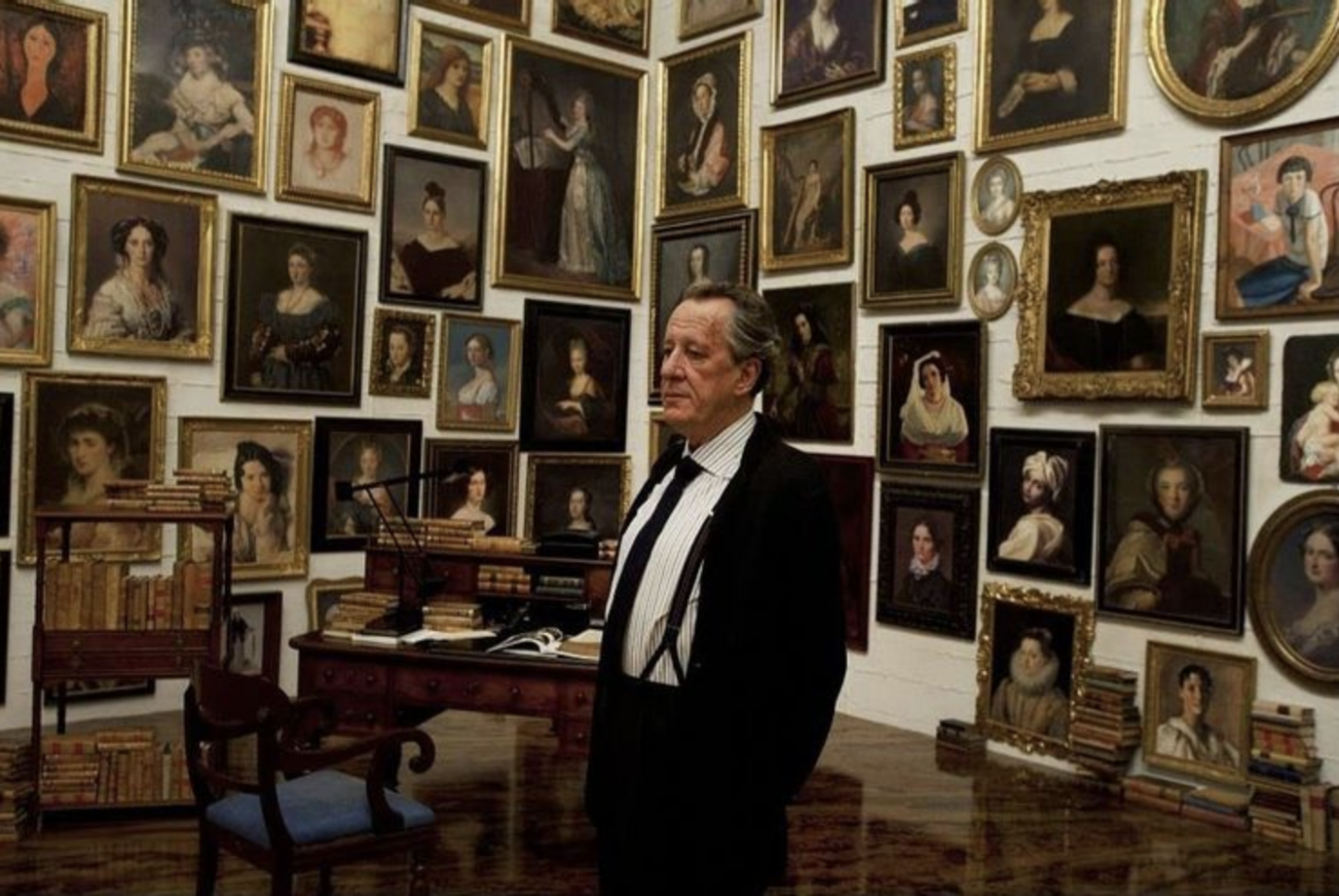
Virgil, seated on a sofa, gazes back with longing—admiration, reverence, even desire. True to the meaning of his name, Virgil (from virgin), he has never shared intimacy with a woman in real life. For him, the women in the portraits are his lovers. His careful curation expresses his devotion. In silence, he pours his heart out to them. He speaks not a word, but the room is ablaze with passion. His feelings are never confessed, yet surge beneath the surface.
At this moment, Morricone’s music rises—soft at first, then swelling like Virgil’s emotions. The reason and composure he always relied upon abandon him. Surrounded by these women who gaze down at him, Virgil feels his innermost desires awaken. The portraits embody art and sensuality alike. Their painted eyes seem to sing to him, urging him to reveal his secrets, luring him into a pursuit he can never end.
In the end, Virgil falls in love with a young woman—and in doing so, loses everything: his collection, his partnership with Billy, his carefully guarded life. The young woman ultimately betrays him and leaves, yet Virgil still believes in her words: “There is always something authentic concealed in every forgery.”
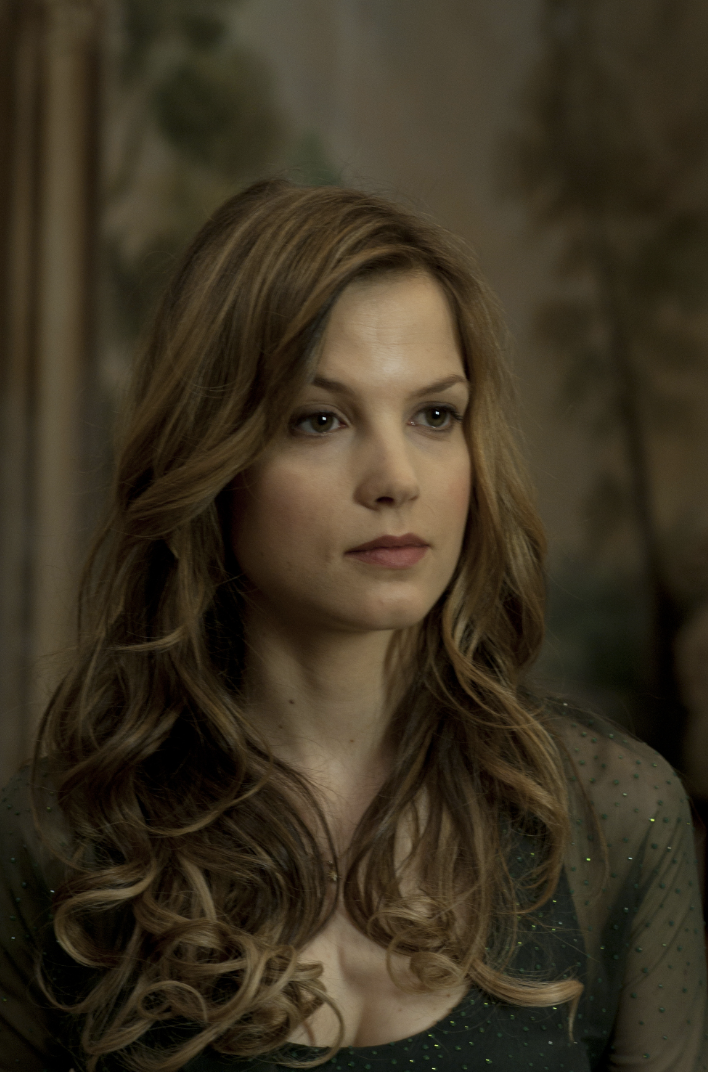
Every forgery holds a fragment of truth.
Just like the portraits that cover Virgil’s walls: though the women are not real, the art is genuine, and so too is Virgil’s love for them.
And just like his fleeting romance: though the woman deceived him, his feelings were true. Before leaving, she told him earnestly: “Whatever happens, know that I love you.”
Still, Virgil lost everything—his collection, his friend, his love, his carefully planned life.
Perhaps, in the real world, even the deepest love pales beside a painting on the wall.
People are real, yet love is often false. A portrait may be artifice, but its value is eternal, and it will never betray you.
No wonder the thief of the Mona Lisa was captivated—bewitched by her eternal, enigmatic smile.
After watching the film and hearing the haunting voices of the painted women, perhaps we can understand why, since ancient times, artists have devoted themselves wholly to their art without regret. In life, there are few people we can trust completely. The returns of reality often fall short of the devotion we give. Compared to that, the gaze of a woman in a painting—her every expression, every smile—offers a singular fidelity.
Those paintings on the wall, though “false,” may be the only things we can truly rely on.